
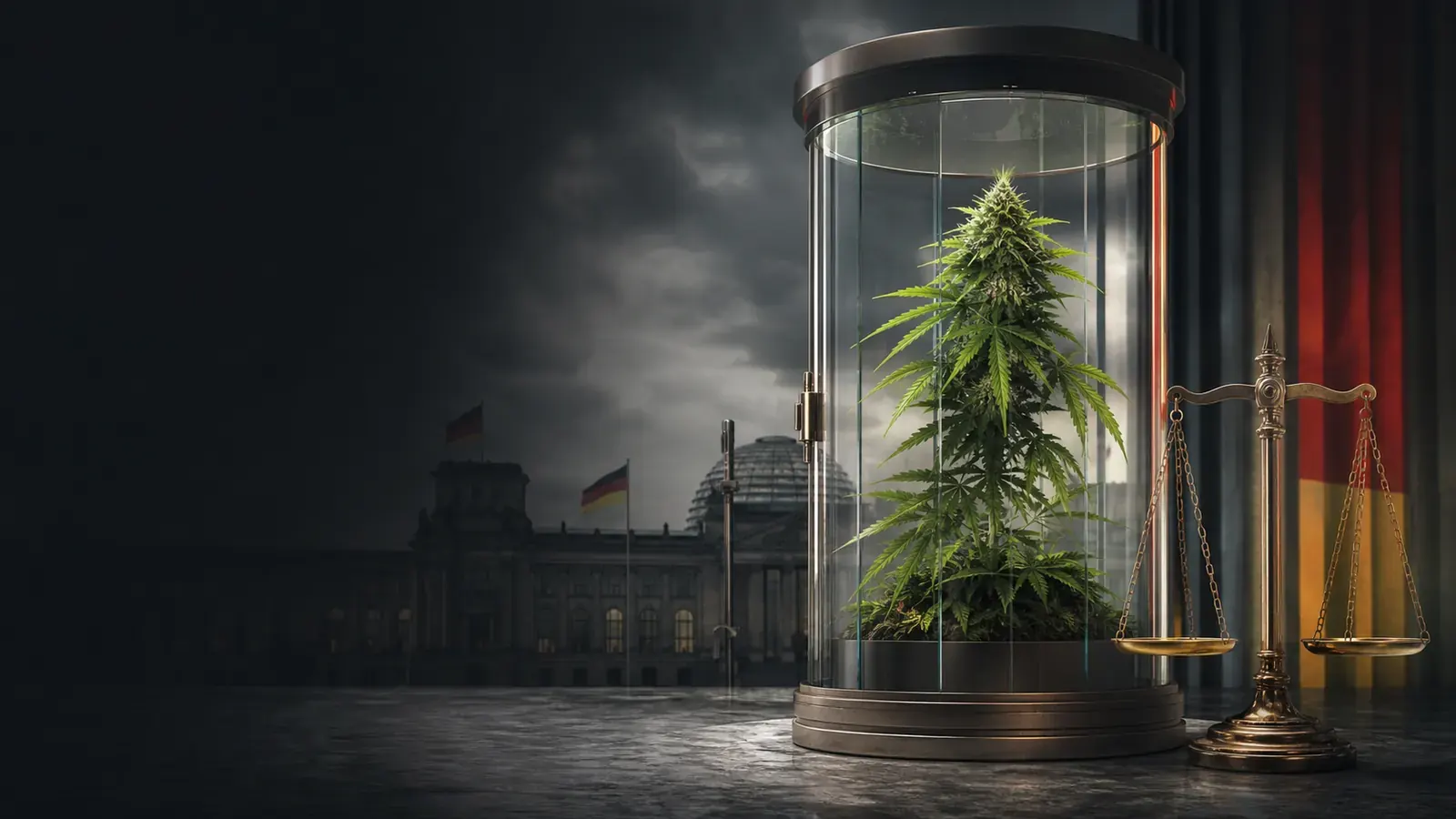
Berlin intends to stick with legalisation
Federal Drug Commissioner Hendrik Streeck has made clear in a recent statement that cannabis should remain legal in Germany.
The aim is not to reverse the existing legalisation but to stabilise it and regulate it more strongly.
In the current political discussion, Streeck emphasises the need for a realistic drug policy that combines both health protection and social responsibility.
“We must not push the people who consume cannabis back into illegality, but we have to control the market,” Streeck said, according to Pharmazeutische Zeitung.
With this, the drug commissioner refers to the roughly five million Germans who regularly consume cannabis, and to the urgent need to combat black-market structures sustainably.
Regulation instead of regression
Streeck makes it clear: the federal government’s course remains fundamentally pro-legalisation, but implementation is to be more strictly monitored and controlled.
A central concern is the clear separation between medical cannabis and recreational use.
Above all, the latest developments in telemedicine and online prescriptions are causing debate:
The drug commissioner sees a need for action, as a significant rise in import volumes of medical cannabis has been recorded in recent months, partly by over 400 percent.
In this context, the Federal Ministry of Health announced adjustments:
- Prescriptions should in future again require an in-person medical examination.
- The shipping of medical cannabis is to be restricted or banned entirely.
- Pharmacy-only dispensing and detailed documentation requirements are to be strengthened.
These measures are meant to ensure that medical cannabis is treated as a medicine, not as a substitute for the recreational market.
Youth protection, prevention and responsibility
Alongside medical regulation, youth protection is also at the centre of the debate.
According to current data, around 31.6 percent of young adults (18–25 years) now consume cannabis, a clear increase compared to previous years.
Streeck therefore emphasises that education, prevention and the protection of minors must play a central role in cannabis policy.
“Legalisation must not be a free pass,” says Streeck. “We need education, control and responsibility, not a romanticisation of consumption.”
Between pharmacies and cultivation associations: an industry in motion
While pharmacies continue to handle the bulk of medical supply, the number of cannabis social clubs and cultivation associations is growing.
However, a tension is emerging here:
Medical supply follows strict pharmaceutical guidelines, while the recreational market is still organisationally and legally inconsistent in many areas.
For the drug commissioner it is clear:
Professionalisation and quality assurance are the keys to a credible, long-term viable legalisation.
That also means: brands, providers and pharmacies will in future have to work together more closely to supply patients and consumers alike with transparent, safe products.
420BRANDS commentary: professionalisation instead of pop culture
For the cannabis industry, the current development is a signal:
Legalisation is not up for debate, but it is growing up.
What counts now is professionalism, credibility and compliance.
The era of pure “lifestyle marketing” is coming to an end. Instead, medically grounded brands are emerging that build trust and convince through transparency.
420BRANDS sees a clear task here for the communications industry:
Education, knowledge transfer and responsible storytelling are the foundation of a sustainable market.
“Legalisation stays, but with more control.”
(420BRANDS)
Conclusion
Germany is sticking with its course of legalisation, but the political direction is becoming clearer:
Less chaos, more control. Less symbolic politics, more substance.
For companies this means:
Those who now bet on serious brand building, medical education and sustainable structures will be among the winners of the new phase.
The drug commissioner’s message is clear:
The future of the cannabis market lies in responsible growth, not in uncontrolled expansion.
Sources & further information
- Pharmazeutische Zeitung: Cannabis to stay legal (21 October 2025)
- Federal Ministry of Health: Statement by Federal Drug Commissioner Hendrik Streeck (October 2025)