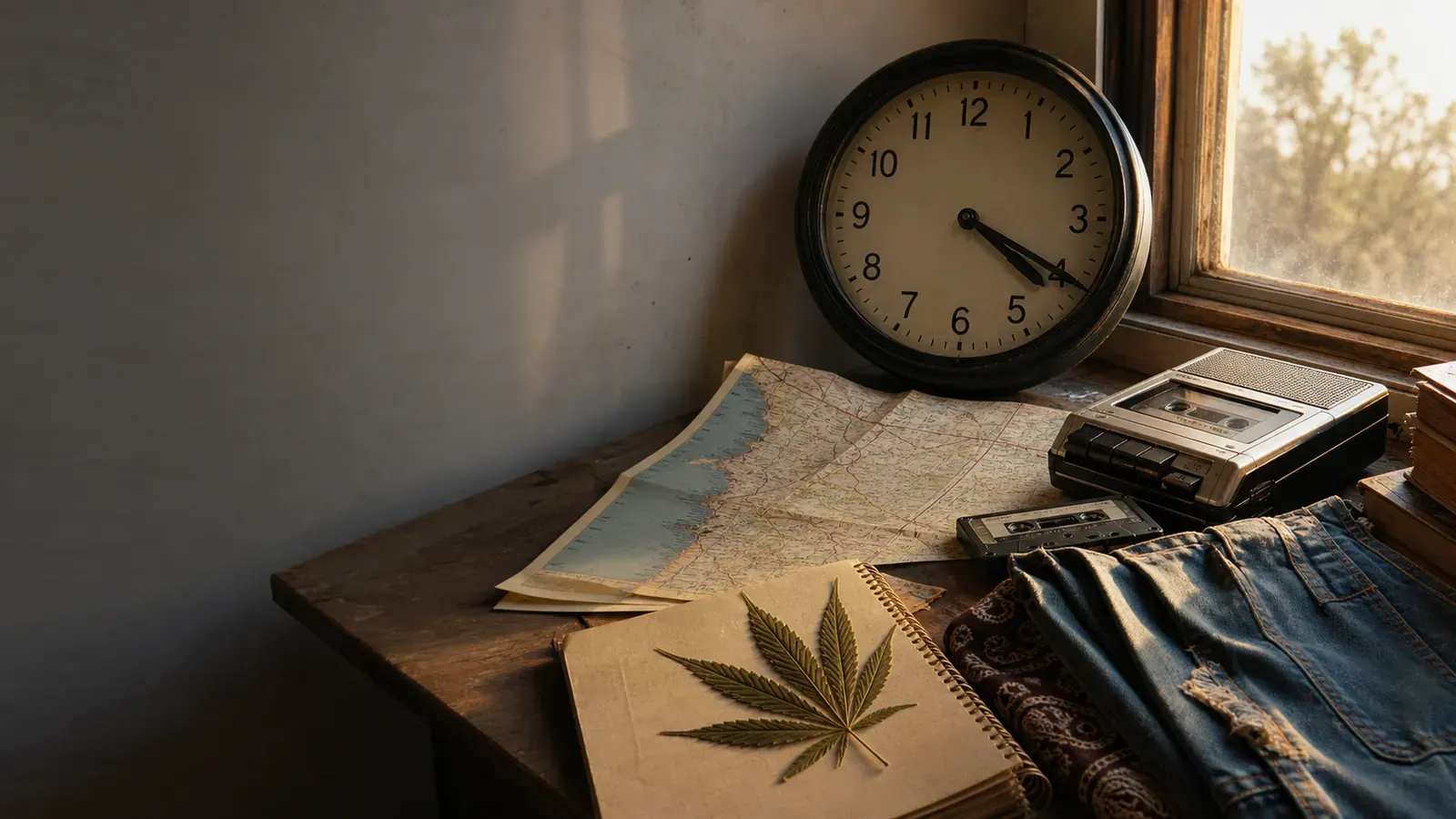
What does 420 mean?
420 (pronounced “four-twenty”) is the most famous code in cannabis culture worldwide. It stands for the shared session, for the community behind it and for an unofficial holiday: April 20 (4/20 in US date format), when the 420 community gets together around the globe. Many also meet daily at the “sacred” time: 4:20 pm.
But where does the code actually come from? The true story beats every myth, and it starts with five students and a treasure map.
The Waldos: five students and a lost grow
Autumn 1971, San Rafael High School in Marin County, California. Five friends (Steve Capper, Dave Reddix, Jeffrey Noel, Larry Schwartz and Mark Gravich) called themselves “the Waldos”, because their hangout spot was a wall on the school grounds.
One day the Waldos got hold of a genuine treasure map: a member of the Coast Guard had planted a small cannabis patch on the Point Reyes peninsula that he could no longer tend, and handed the boys a hand-drawn map to the plants.
The plan: meet after practice, search together. The meeting point: the Louis Pasteur statue in front of the school. The time: 4:20 pm.
In the school corridors they reminded each other with the code phrase “4:20 Louis”, later a simple “420” was enough. Teachers, parents, outsiders? Understood nothing. That was exactly the point: 420 was an insider code.
By the way: the Waldos never found the patch, despite weeks of searching. The code, however, stuck.
From Marin County to the world: the Grateful Dead connection
The reason a private joke between five students became a global code is a band: the Grateful Dead. The band had moved to San Rafael, and the Waldos had direct ties to their circle: Dave Reddix’s older brother was friends with bassist Phil Lesh, and the boys hung out at rehearsals and backstage sessions.
Within the Deadhead community, the fans following the band from show to show, “420” spread over the years as a sign of recognition. The school code became a scene code.
The final breakthrough came in December 1990: at a Grateful Dead concert in Oakland, fans handed out flyers calling on people to smoke together on April 20 at 4:20 pm. One of those flyers reached Steve Bloom, a reporter at High Times magazine, which printed it in 1991. From then on, the world’s most influential cannabis magazine carried the code to every corner of the planet.
High Times later researched the origins and confirmed: the Waldos are the originators. To this day the five can prove it, with postmarked letters from the 70s in which “420” appears, and further documents stored in a San Francisco bank vault.
The biggest 420 myths, fact-checked
Stubborn legends surround 420. Here are the most common ones and why they’re wrong:
- “420 is the police radio code for smoking weed.” False. There has never been a US police code 420 for cannabis offences. The myth is as widespread as it is unproven.
- “Cannabis contains 420 chemical compounds.” False. Depending on how you count, the plant contains well over 500 known compounds, including more than 100 cannabinoids.
- “420 comes from Bob Marley.” False. Neither his birthday (February 6) nor the day he died (May 11) has anything to do with the date.
- “It’s the California penal code for cannabis.” False. Section 420 of the California Penal Code deals with obstructing public land. Curiously though: California’s 2003 medical cannabis law was named Senate Bill 420 (presumably with a wink); the deliberate choice of number is an open secret in the scene. By then, the code had long become pop culture.
April 20: from code to holiday
The time became a date: April 20 (4/20) has established itself worldwide as the unofficial holiday of the cannabis community. From Denver to Amsterdam to Berlin, festivals, marches and community events take place on this day, from the political Global Marijuana March to culture and music formats.
In Germany, too, April 20 has fully arrived in the mainstream since the partial legalisation through the Cannabis Act (CanG) on April 1, 2024: 420 events grow every year, brands, artists and community come together. And that’s exactly the environment we call home: with our own 420 Music Contest and as format partner of THE STEAMERS, the format by our partner Hanfkranz.
Why 420 matters for brands
420 is more than an inside joke from 1971. It is the cultural anchor of a global community. If you understand the origin and meaning of the code, you understand how this community communicates: through shared codes, real meeting places and authenticity instead of ad-speak.
That’s exactly why cannabis marketing doesn’t work like classic advertising. Brands that simply print “420” on a banner on April 20 look like tourists. Brands that take the culture seriously (at events, with artists, inside the community) become part of it.
Want to know how your brand can authentically land in 420 culture? Talk to us or take a look at what we do for brands.