
CBD advertising requires a differentiated review
CBD products are widely available in Germany, and yet CBD advertising is one of the hardest marketing disciplines there is. The reason is a double bottleneck: product law on one side, platform policies on the other. This guide shows where the limits are and how CBD brands grow predictably anyway.
As always: a marketing assessment from practice, not legal advice. The regulatory review of your product belongs in every serious setup.
Hurdle 1: the product category sets the rules
“CBD” is not a legal category. What matters is as what the product is placed on the market:
- Cosmetics (CBD creams, oils for external use): advertising fundamentally possible, but without health claims that contradict the product status.
- Food / novel food (ingestible CBD oils, edibles): the novel-food question and the Health Claims Regulation set tight limits, efficacy promises are off-limits.
- Aroma products: marketability and promotion are subject of ongoing case law, so caution is the programme here.
- Medical CBD (as a medicine): pharmaceutical advertising law applies, see our MedCanG advertising guide.
Practical rule: no healing claims, no disease references, no THC romanticism. Clean declaration and communication is the foundation.
Hurdle 2: platforms block faster than the law
Even legally flawless CBD advertising regularly fails at platform ad policies:
- Google Ads: CBD falls under restricted categories, ads are mostly rejected in Germany.
- Meta: ads with CBD references get blocked, repeat offences cost entire business accounts.
- TikTok & co.: cannabis-adjacent content gets throttled or removed.
Every CBD founder knows the consequence: paid ads are no reliable foundation. They can work in bursts, until the next suspension.
What works: the CBD growth strategy
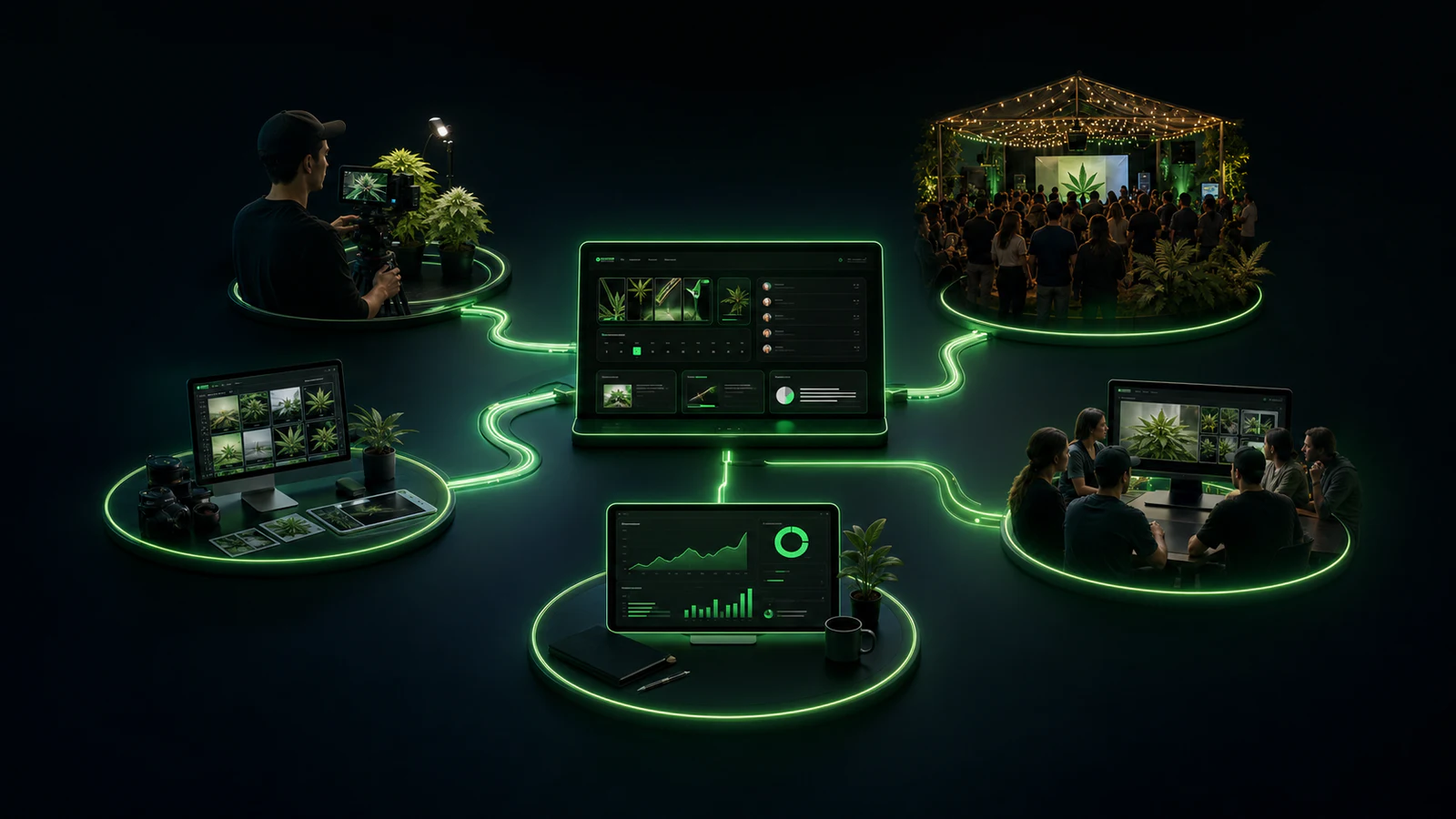
1. SEO: the most important channel for CBD brands
People actively search for CBD products and information. Relevant content and a technically clean website create a more controllable route to the audience. A strong web design and SEO foundation reduces dependence on individual advertising platforms.
2. Organic social media + creators
Content the community actually cares about (lifestyle, culture, education) grows without ads too. Cannabis artists and creators amplify reach authentically where your own channels are still small (social media campaigns, creator placement).
3. Events & tangibility
At cannabis events and trade fairs customers can experience, test and buy products. That is the most direct sales and brand channel in the industry (event activation).
4. Email & own community
Newsletters and CRM are among the channels a brand can control more directly. They require valid consent, relevant content and continuous care.
5. Store excellence
When traffic is earned organically at a cost, the store has to convert: fast load times, clear product pages, frictionless checkout (e-commerce).
Hemp marketing: more than CBD
Hemp advertising doesn’t end at CBD oils: hemp foods, hemp fashion, cosmetics and sustainable hemp products reach the same culture-affine audience, often with fewer restrictions. The strategies in this guide apply to the entire hemp category; the full legal picture is in the cannabis advertising guide.
Conclusion: CBD advertising is won by whoever becomes independent
Robust CBD brands distribute visibility across several relevant channels. SEO, community, events, creators and owned contacts can form a system that is less dependent on a single platform decision.
Want to make your CBD or hemp brand independent and visible? Learn more about our brand placement for CBD, hemp and accessories brands or request an initial consultation.
Primary sources & legal basis
- Novel Food status catalogueEuropean Commission
- Novel Food status of CBD isolate and CBD extractEuropean Commission